Most pallet rack damage in a working warehouse comes from forklift impacts. Not earthquakes, not overloads, not material defects. Forklifts. The operator misjudges a turn, swings a load too wide, or backs into a column they did not see.
Rack protection is the cheapest insurance you can buy. A $60 column protector can save you a $2,000 rack repair, a stop-work order, and a workers compensation claim. The problem is that the rack protection market is full of products that look protective but do almost nothing in a real impact. Knowing the difference matters.
Why Forklift Damage Is So Expensive
A forklift moving at 4 mph carrying a 3,000 lb load delivers a serious impact when it hits a rack column. The column does not have to be visibly destroyed for the rack to be compromised. A bent flange, a cracked weld, or even a column that is out of plumb by half an inch can reduce the rated capacity of the rack significantly.
OSHA and Nevada code both require damaged rack components to be unloaded and replaced before further use. That means the entire bay or even the entire row gets shut down until the repair is complete. Lost storage, lost productivity, and rush-fee replacement parts add up fast.
Bolt-On Column Protectors
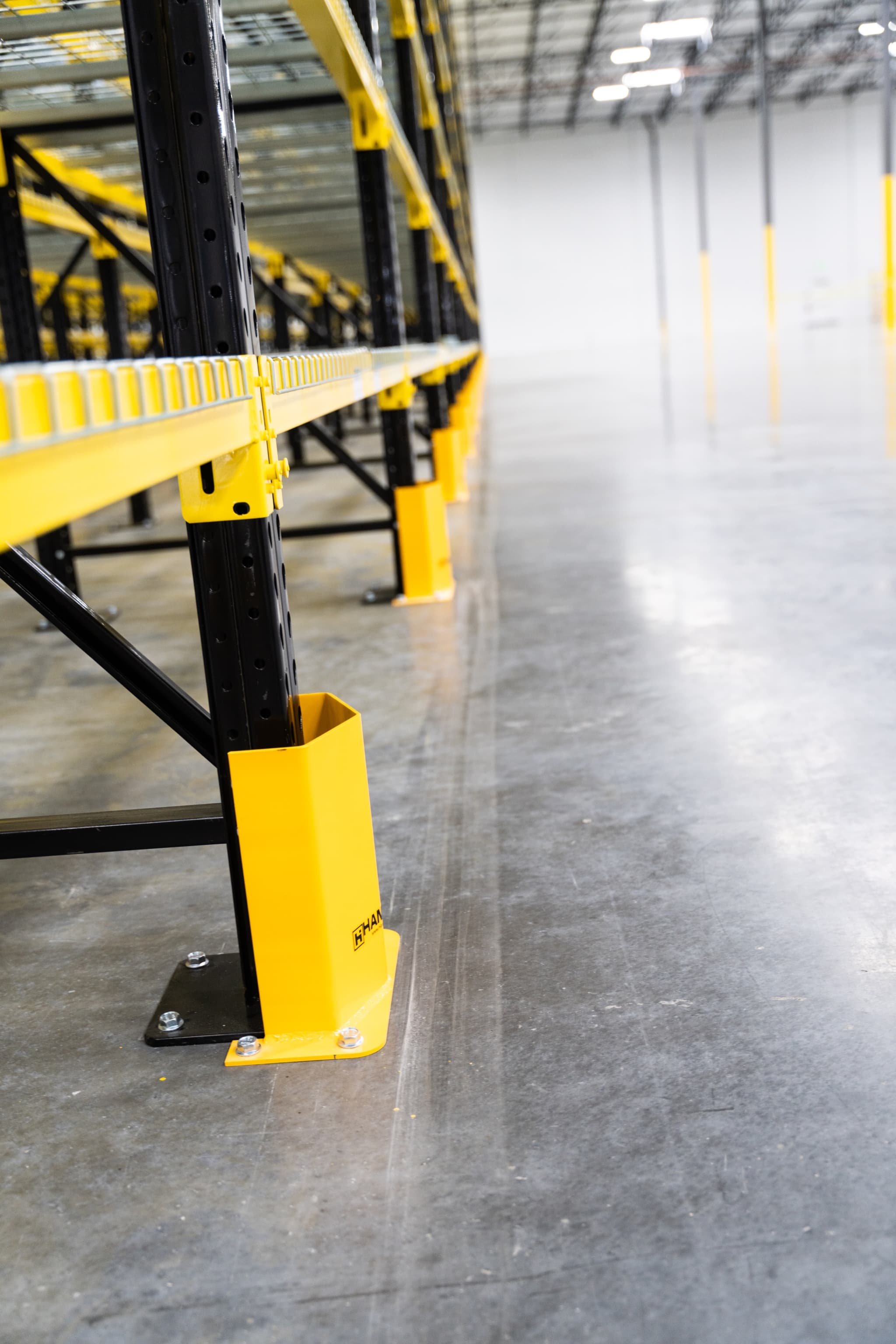
These are the steel guards that bolt to the front face of an upright column. They wrap around the column and absorb impact through deformation. When done right, they save the column. When done wrong, they transfer the impact directly into the column they were supposed to protect.
Look for bolt-on protectors that are at least 12 inches tall, 3/16 inch thick steel minimum, and either bolted with at least four anchors or wrapped fully around the column. Cheap stamped guards held on with two screws bend on first impact and become decorative.
Slip-On and Snap-On Column Protectors
Slip-on protectors made of high-density polyethylene or polyurethane absorb impact through compression rather than deformation. They are less expensive than steel and do not require anchoring or drilling.
They work well for low-speed glancing blows, which is the most common type of damage. They do not stop a direct high-speed hit. For aisles where forklifts move at full travel speed, steel is the right call. For pick aisles where forklifts are slower and more careful, slip-on plastic is often enough and far cheaper to replace after a hit.
End-of-Aisle Guards and Bollards
The most damaging impacts happen at the end of aisles, where forklifts are turning and accelerating. End-of-aisle guards and bollards take the hit before it reaches the rack.
Steel bollards filled with concrete, anchored into the slab, are the most effective option. They will stop a forklift cold. End-of-aisle steel barriers (sometimes called end protectors or wraparound guards) protect the entire end frame of the rack row. Either is far cheaper than rebuilding a damaged end frame.
Wire Mesh Backing and Safety Netting
Rack protection is not only about preventing rack damage. It is also about catching falling product before it lands on someone. Wire mesh backing closes off the back of the rack so that loads pushed too far through the front cannot fall out the back into the next aisle. Safety netting does the same thing with mesh fabric.
OSHA does not technically require this in every warehouse, but it is required in many high-pile fire code situations and is strongly recommended any time there is foot traffic on both sides of a rack row.
What Does Not Work
A few common rack protection mistakes show up over and over.
- Painting the column yellow. It is more visible. It does not stop impact.
- Light-gauge plastic sleeves taped or zip-tied around the column. They look protective. They are not.
- Rubber mats wrapped around the base. Useless against forklift impacts.
- Two-screw stamped steel guards. Bend on first impact and provide minimal protection.
- Skipping end-of-aisle protection because it costs extra. End-of-aisle damage is the most common rack damage we repair.
Source 4 and Rack Protection
We include a rack protection plan in every install we quote. Bolt-on column protectors, slip-on guards, end-of-aisle barriers, bollards, and wire mesh backing are all in our standard catalog. We can also retrofit protection onto existing rack systems that were installed without it.
If you have had repeated forklift damage in your warehouse, call us at (702) 291-9520. We will walk the aisles, identify the high-impact zones, and recommend the protection that actually stops damage where it is happening.